
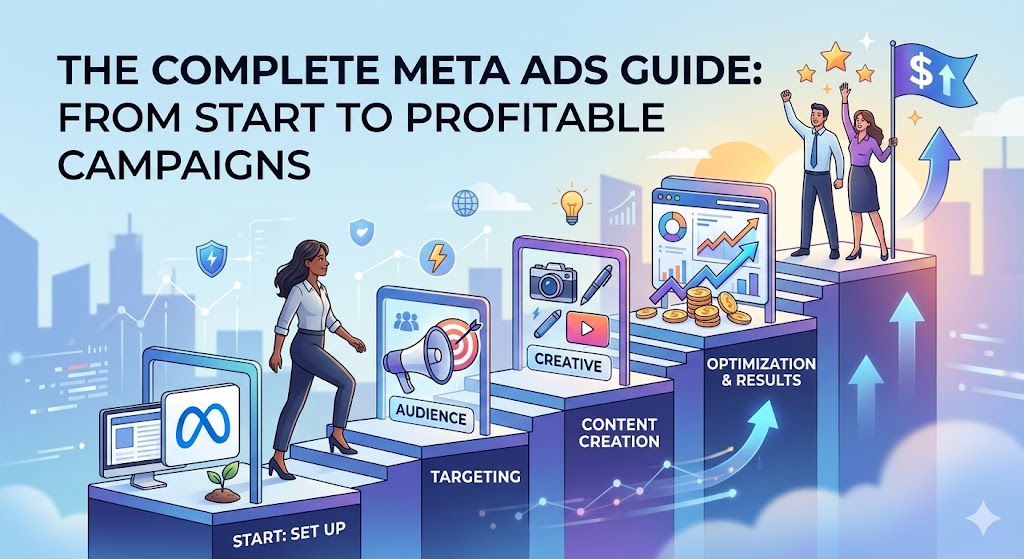
In today’s digital world, running ads on Meta Platforms (Facebook & Instagram) is one of the most powerful ways to generate leads, sales, and brand awareness.
But if you’re a beginner, Meta Ads can feel confusing 😵💫
Don’t worry! In this complete guide, we’ll break it down into simple steps so you can go from beginner to pro.
🔹 Step 1: Meta Ads Basics
Before running ads, you need to set up the foundation:
- Create your Ad Account
- Set up Business Manager
- Install Meta Pixel on your website
👉 Pixel helps you track user behavior and conversions.
🔹 Step 2: Campaign Objectives
Every ad starts with a goal 🎯
Choose the right objective based on what you want:
- Awareness (Brand visibility)
- Traffic (Website visitors)
- Leads (Form submissions)
- Sales (Conversions & purchases)
👉 Pro Tip: Never run ads without a clear goal.
🔹 Step 3: Campaign Structure
Meta Ads follow a simple structure:
Campaign → Ad Set → Ad
- Campaign: Objective
- Ad Set: Audience + Budget
- Ad: Creative (image/video + text)
🔹 Step 4: Audience Targeting
This is where most people make mistakes ❌
Target the right audience using:
- Location
- Interests
- Custom Audience (existing users)
- Lookalike Audience (similar users)
👉 Better targeting = Better results + lower cost
🔹 Step 5: Creative Strategy
Your ad creative decides success 💡
Focus on:
- Scroll-stopping visuals
- Clear Primary Text
- Strong Headline
- Powerful CTA (Call To Action)
👉 Example CTA: “Book Now”, “Learn More”, “Get Offer”
🔹 Step 6: Placements
Choose where your ads will show:
- Facebook Feed
- Instagram Feed
- Reels
- Audience Network
👉 Tip: Use Automatic Placements for beginners.
🔹 Step 7: Budget & Bidding
Control how much you spend 💰
- Daily Budget
- Lifetime Budget
- Automated Bidding
👉 Start small, test, then scale.
🔹 Step 8: Tracking & Optimization
This is where real growth happens 📈
- Track conversions using Pixel
- Analyze performance
- Optimize ads (pause low performers, scale winners)
👉 Data is everything in ads!
🔥 Final Thoughts
Running Meta Ads is not just about spending money — it’s about strategy + testing + optimization.